For energy and utility organizations, keeping the power flowing is essential. Network deception is ideal for safeguarding energy, utilities, and critical infrastructure, as it exposes adversaries’ presence early and safely, before they can inflict serious damage.
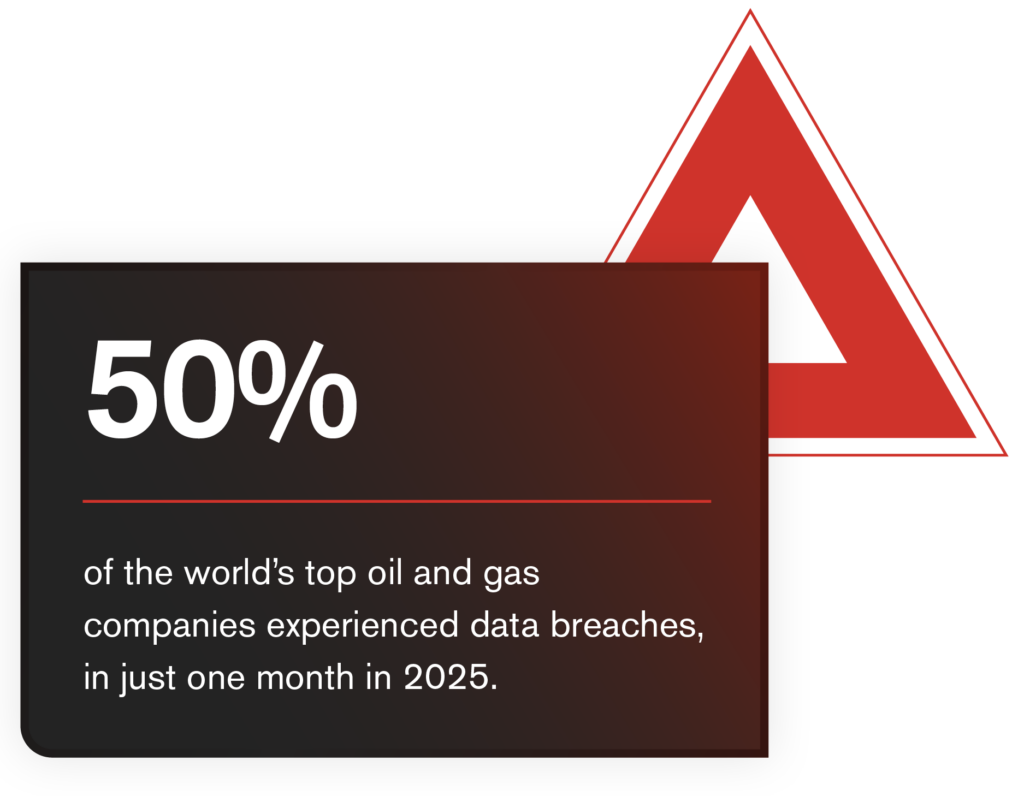
We rely on vast industrial systems of energy and utilities to ensure the lights stay on, water comes out of the taps, and we can still fill up our cars. However, these essential systems are have an expanded attack surface, thanks to the convergence of IT and OT , while attacks on substations, pipelines, distribution networks, and the access routes that connect them continue to rise. Research by Cybernews found that in just one month in 2025, 50% of the world’s top oil and gas companies experienced data breaches.
Defending these environments is uniquely difficult, because many OT networks rely on legacy technology. Infrastructure can be decades old, while creating patches is incredibly specialist and can take months. Even routine security changes can risk disrupting operations. SOC teams need stronger protection, but they cannot afford downtime. Meanwhile, AI further raises the stakes by enabling attackers to automate reconnaissance, analyze large volumes of data, and identify potential attack paths faster than traditional manual methods.
If you’re reading this, though, you already know all that. So what can you do?
Enter deception technology. By creating realistic decoys and digital twins, organizations can detect malicious activity with no risk to your OT environments. All the while, your team will gather threat intelligence, observing adversary behavior in real time, without impacting production systems or business continuity. This article explores practical network deception strategies that keep critical operations running.
Why Energy and Utility Infrastructure Attracts Attackers
Energy infrastructure offers something most adversaries want: leverage. A successful attack can disrupt essential services, create economic damage, and undermine public confidence. For nation-state actors, the goal is often broader than immediate disruption: intelligence gathering or strategic advantage, for example.
Energy environments present plenty of opportunities to gather that access. Attackers could target:
- Transmission and distribution networks
- Substations and control systems
- Remote access pathways
- Connected IT and OT environments
For grid operators and utility providers, securing these environments is especially challenging. Generating and distributing electricity depends on systems that function 24/7. Routine maintenance, remote engineering access, and operational continuity all limit how quickly teams can implement security changes. Therefore, it’s beneficial for organizations to prioritize resilience as much as prevention.
It’s important to remember, though, devastating attacks on critical infrastructure start long before an adversary gains access to the environment. Reconnaissance is the foundation of almost every cyber attack. Attackers scan networks to identify exposed services, before testing access points and mapping potential routes toward valuable assets. They are looking for any and every way to move deeper into the environment.
This process can take time, and critical infrastructure attackers tend to prioritize detail over speed. The longer an attacker remains undetected, the more they learn about how systems operate and where disruption would have the greatest impact. For defenders, that creates a challenge: the activity that matters most begins long before traditional cybersecurity tools generate alerts.
Why Traditional Detection Misses Substation and Grid Reconnaissance
Here’s where many security teams run into trouble. Traditional threat detection systems excel at identifying known threats. They block malicious traffic, flag suspicious files, and enforce security policies. What they struggle to do is higlight recon that looks like routine or novel threats.
An attacker conducting reconnaissance rarely behaves like an attacker. They may scan a network segment, test a VPN login, probe an HMI, or explore available systems using legitimate credentials. In many cases, the tools and protocols they use are the same ones administrators rely on every day, so the most important signals of attack preparation appear routine. A VPN login or HMI probe may not raise concern when viewed in isolation, but together they can indicate that an adversary is building a picture of the environment.
By the time security teams receive a clear warning, they have already lost valuable time. The data exists, but it’s too difficult to identify which activities deserve attention before reconnaissance turns into compromise.
Reconnaissance in Energy and Utility Environments
In energy and utility networks, the reconnaissance process typically involves:
- Mapping network architecture
- Identifying exposed services
- Discovering remote access routes
- Evaluating users, credentials, and systems
- Identifying pathways toward operational assets
An attacker may begin by probing internet-facing systems, VPN gateways, or remote access infrastructure. In a substation environment, that could mean probing VNC on an HMI, telnet on a switch, or a VPN portal before looking at devices behind the VPN. Remote support access is often part of normal operations, which makes compromised VPN credentials and third-party technical support accounts especially dangerous.
If adversaries gain an initial foothold, the focus typically shifts to lateral movement, with the goal of determining how the environment is connected and where valuable assets reside. For energy and utility environments, those assets could include substations, transmission networks, distribution systems, or the IT/OT boundaries that connect business and operations. Vendor access pathways can also attract attention because they may provide a route deeper into the network.
These activities are not immediately disruptive, which is precisely why they are so easy to overlook. Yet each scan, query, and discovery action reveals intent. If you can detect those intent signals amid the noise, you can see that an adversary is actively preparing an attack and take steps to prevent it.
How Network Deception Exposes Attacker Intent Before Disruption
Network deception flips the traditional attacker-versus-defender dynamic. Instead of waiting for attackers to find a route into operational systems, security teams can deploy realistic decoy environments to smoke out attackers in a safe, controlled manner. An advanced threat detection system built around deception gives those interactions somewhere safe to happen.
With deception, digital twins, decoys, and fictitious assets are shaped to look like systems an adversary would expect to find during reconnaissance.
CounterCraft is experienced at creating, in the case of energy and utilities, campaigns that mirror a technical support VPN, an engineering workstation, or HMI server. Hyper real breadcrumbs then guide attackers toward those assets, creating a deception campaign around a specific risk.
Once an attacker engages, the signal changes. After all, there is no legitimate reason for anyone to be in a decoy environment. From then on, security teams can observe real behavior inside an environment designed for that purpose. Each action the adversary takes, whether testing credentials or inspecting services, adds context.
For energy and utility organizations, that matters. Attackers may be looking for pathways toward operational assets. A deception environment lets defenders see that interest early, before the attacker reaches the systems that keep services running. Security teams can see what attackers are drawn to, which credentials they attempt to use, and how they plan to move through the environment. Their reconnaissance becomes your evidence.
How Attacker Behavior Becomes Actionable Threat Intelligence
Specific, actionable threat intelligence is especially valuable in energy and utility environments, where every investigation has to compete with uptime pressures and complex IT/OT architecture. A generic threat feed describes activity seen elsewhere. Deception-generated intelligence comes from adversaries interacting with assets built around your own environment and its specifics.
When attackers enter a deception campaign, the threat intelligence platform collects real-time data from their interactions. Security teams can see the TTPs they use and which credentials they try. That intelligence is then enriched with MITRE ATT&CK and IOC context, so teams can connect attacker behavior to a clearer response.
For an energy provider, this could help answer questions that conventional alerts leave open:
- Is this automated scanning or a targeted attempt to reach critical systems?
- Which access routes attracted the attacker?
- What credentials, IP addresses, or domains are involved?
- Which TTPs should be fed into SIEM, SOAR, or other threat response solutions?
This is where network deception becomes more useful to the SOC. The signal is specific because it comes from activity against the organization’s own attack surface. It is actionable because it gives defenders technical evidence they can use to investigate, prioritize, and strengthen controls. Beyond day-to-day security, this data also helps energy and utility organizations demonstrate cyber resilience and provide evidence for industry-specific security and compliance requirements.
Network Deception in Action: The Red Eléctrica Substation Case Study
Red Eléctrica, Spain’s national electricity grid operator, deployed deception to answer a specific critical infrastructure question: what would happen if a configuration error exposed VPN access to a substation?
CounterCraft created a physical communication rack that mimicked a real electrical substation. The aim was to make the VPN credible enough that attackers would treat it as a genuine route into the environment. Once the substation was connected to the Internet, activity started within minutes.
At first, the platform saw automated attempts against VNC running on the HMI, telnet running on the switch, and the VPN web portal. Those attempts were filtered as noise. However, less than two weeks later, a high-priority alert showed something more serious. A threat actor exploited the CVE-2018-13382 vulnerability to take control of the substation via a VPN. Six hours passed between the first exploit and the second VPN connection, showing this was not a basic automated attack.
The attacker then carried out reconnaissance on the devices behind the VPN. But because it occurred inside the deception environment, Red Eléctrica gained real-time intelligence without exposing its operational systems. The intelligence included IoCs such as IP addresses and credentials, as well as TTPs mapped to MITRE ATT&CK.
Read the full case study here >>>
This is network deception and advanced threat detection in practice. It provides security teams with sufficient early visibility to understand adversary behavior, separate noise from targeted activity, and make informed response decisions before critical infrastructure is affected.
Raise Resilience by Identifying Threats Earlier
Energy and utility organizations cannot wait until attackers reach critical systems before they see the risk. Reconnaissance, credential misuse, and lateral movement reveal intent while outcomes are still controllable. Traditional tools can miss those signals because they focus on known threats, policy enforcement, and activity that already looks malicious.
Deception gives defenders earlier evidence to identify threats and respond effectively. When attackers interact with CounterCraft’s advanced deception technology, their behavior becomes actionable intelligence. That intelligence gives security teams what they need to better protect their substations, transmission networks, operational systems, and essential services. Organizations that identify threats earliest are the ones most likely to keep the lights on.
Want to see how it works in your own environment? Contact CounterCraft today.